A parking lot is often the first physical surface a customer, tenant, or visitor interacts with before they ever step foot inside a building. In Woonsocket and the surrounding Blackstone Valley communities, where freeze-thaw cycles are a fact of life, that first impression is shaped as much by function as by appearance. A lot riddled with potholes, standing water, or faded striping signals neglect, even if the business inside is thriving. Beyond aesthetics, a properly paved lot protects vehicles from damage, reduces liability from trip-and-fall hazards, and keeps traffic moving safely during New England’s snow and ice season.
Understanding how Parking Lot Paving Woonsocket actually works, and what separates a lot built to last from one that fails within a few winters, helps property owners ask the right questions and recognize quality work when they see it.
What Parking Lot Paving Actually Involves
Parking lot paving is a multi-stage construction process, not simply the act of pouring asphalt over dirt. It typically includes:
- Site evaluation and grading design to establish proper water flow
- Excavation of the existing surface, if one is present
- Installation and compaction of a gravel or crushed stone base
- Application of one or more asphalt layers, compacted with rollers
- Striping, signage, and accessibility markings once the surface has cured
Each of these stages plays a distinct role. Skipping or shortcutting any one of them is the single most common reason parking lots deteriorate faster than expected.
The Foundation Determines the Lifespan
Asphalt itself is a flexible, durable material, but it can only perform as well as what lies beneath it. A stable base layer, usually several inches of compacted crushed stone, distributes the weight of vehicles and prevents the pavement from flexing and cracking under repeated stress. In areas like Woonsocket, where the ground freezes and thaws repeatedly through the winter, an inadequately compacted base is often the root cause of alligator cracking and sunken sections that appear a year or two after installation.
Contractors typically test compaction density before laying asphalt, since a base that looks solid on the surface can still be loose several inches down. Drainage design is addressed at this same stage. Water that pools on a parking lot doesn’t just create an inconvenience for pedestrians; it seeps into small cracks, freezes, expands, and accelerates pavement failure from the inside out.
Why New England Weather Changes the Equation
Not every region requires the same paving approach, and Rhode Island’s climate is a significant factor in how a durable parking lot should be built. The freeze-thaw cycle common to New England winters puts more stress on pavement than a mild, dry climate would. Water that infiltrates the surface expands roughly nine percent in volume when it freezes, which is enough to crack asphalt from within if drainage and base preparation weren’t handled correctly.
This is why local paving practices often call for slightly thicker asphalt layers and more attention to base drainage than paving specifications used in warmer states. Asphalt mix designs used for parking lots in this region are also formulated to remain flexible enough to handle temperature swings without becoming brittle in the cold or soft in summer heat.
Common Questions Property Owners Ask
How thick should parking lot asphalt be?
Thickness depends on the expected traffic load. Lots designed for standard passenger vehicles are generally built with a thinner surface course than those that need to accommodate delivery trucks, garbage trucks, or other heavy vehicles. A paving professional evaluates anticipated traffic patterns before recommending a thickness, since underbuilding a lot for its actual use is a common cause of premature rutting.
How long does newly paved asphalt take to cure?
Asphalt compacts and cools relatively quickly, but it continues to cure and harden for a period afterward. Most contractors recommend keeping vehicle traffic off a freshly paved lot for at least 24 to 48 hours, and avoiding sharp turns or heavy loads on the surface for several weeks while it fully sets.
What is the difference between paving and resurfacing?
Paving typically refers to installing a new asphalt surface, either on a freshly prepared base or as a full replacement of a deteriorated lot. Resurfacing, sometimes called an overlay, adds a new layer of asphalt over an existing surface that still has a sound base. The right choice depends on the condition of what’s already there, which is why an inspection of the base and subsurface is usually the starting point for any project.
How can drainage problems be identified before paving begins?
Standing water after a rainstorm is the most visible sign of a drainage issue, but subtler problems, like water pooling near building entrances or along the edges of a lot, can also indicate that the existing grade needs correction. Addressing grading during the paving process, rather than after, prevents these issues from resurfacing in the new pavement.
Signs an Existing Lot May Need Attention
Property owners don’t need paving expertise to recognize the early warning signs of pavement failure. Watch for:
- Alligator-pattern cracking across large sections of the surface
- Potholes that reappear shortly after being patched
- Puddles that take unusually long to drain
- Faded or barely visible striping and directional markings
- Edges of the pavement crumbling or separating from curbs
Catching these signs early, before the underlying base is compromised, often means the difference between a resurfacing project and a full rebuild.
Accessibility and Traffic Flow Considerations
A well-paved lot does more than hold up structurally. Thoughtful design accounts for how vehicles and pedestrians actually move through the space. This includes clear striping for parking spaces and fire lanes, accessible routes and designated accessible parking that meet current accessibility guidelines, and logical traffic flow that reduces the risk of collisions in tight areas. These elements are typically planned alongside the paving work itself, since retrofitting striping or accessible routes after the fact is more difficult than incorporating them into the original layout.
Maintaining a Parking Lot After Installation
A newly paved lot is not maintenance-free. Routine care extends the life of the investment considerably. Sealcoating every few years protects the surface from UV exposure, fuel and oil spills, and moisture penetration. Prompt crack sealing prevents small fissures from widening into larger structural problems, especially before winter arrives. Periodic inspection of drainage areas ensures water continues to flow away from the pavement as designed, rather than pooling as the surface settles slightly over time.
Property managers who build a simple annual inspection routine into their maintenance calendar tend to see their pavement last significantly longer than those who wait until visible damage appears.
Choosing the Right Asphalt Mix for the Job
Not all asphalt mixes are created equal, and matching the right mix to the right application is part of what separates a lot that performs well from one that struggles under its actual traffic load. Mix designs vary in the size and gradation of aggregate used, the ratio of asphalt binder, and the additives incorporated to address specific performance needs. A mix intended for a lightly used employee parking area doesn’t need the same load-bearing characteristics as one designed for a loading dock that regularly sees delivery trucks. Paving professionals typically evaluate the anticipated traffic mix, passenger vehicles, occasional heavy trucks, or a combination, before recommending a specific asphalt formulation, since underspecifying the mix for actual conditions is a common contributor to premature rutting and cracking.
Permits, Setbacks, and Local Considerations
Depending on the scope of a project, paving work in Woonsocket may involve permitting requirements, particularly for larger commercial lots or projects that alter existing drainage patterns. Municipal requirements can address things like stormwater management, required setbacks from property lines, and accessibility compliance for publicly accessible lots. While a homeowner repaving a small residential driveway may not encounter significant regulatory steps, larger projects benefit from an early conversation about what permits or inspections might apply, since discovering a requirement mid-project can cause costly delays.
Equipment Involved in a Paving Project
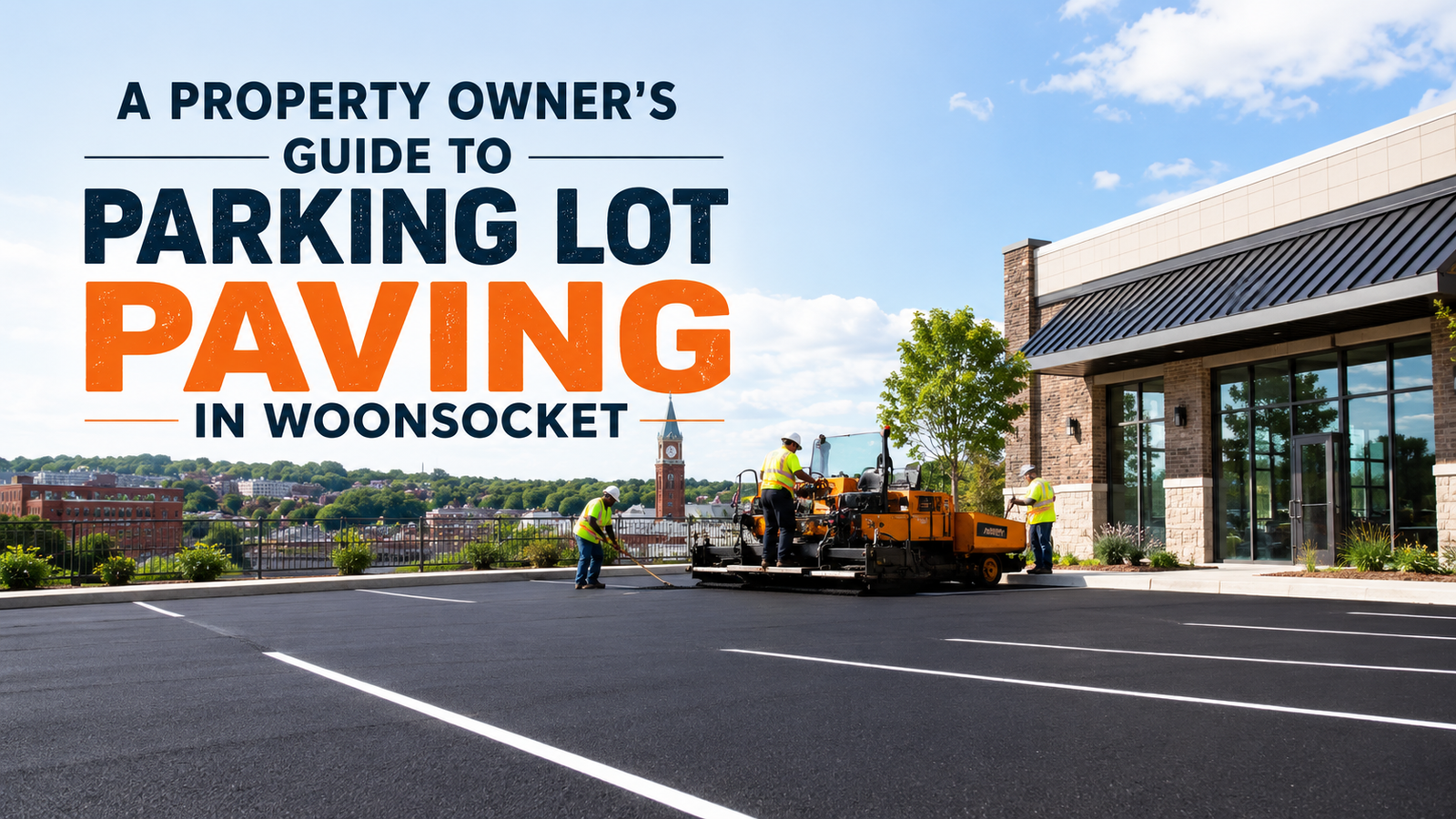
Understanding the equipment used during a paving project can help property owners better appreciate what’s happening on site and why certain steps take the time they do. A typical project involves excavation equipment to remove old material and prepare the subgrade, a paver machine that spreads hot asphalt evenly across the prepared base at a controlled thickness, and a series of rollers, often starting with a breakdown roller immediately behind the paver and finishing with a smaller roller for final compaction. Each piece of equipment plays a specific role in achieving the density and smoothness that determine how well the finished surface performs over time.
Bringing It All Together
A parking lot is a long-term structural investment, not just a surface treatment. The base preparation, drainage design, material selection, and attention to regional climate conditions all work together to determine how long the pavement performs before it needs major repair. For property owners in Woonsocket evaluating a paving project, understanding these fundamentals makes it easier to have an informed conversation with a contractor and to recognize the kind of workmanship that holds up through Rhode Island winters. Those researching parking lot paving in Woonsocket will find that asking about base preparation and drainage design upfront is one of the most useful steps in planning a durable, long-lasting lot.